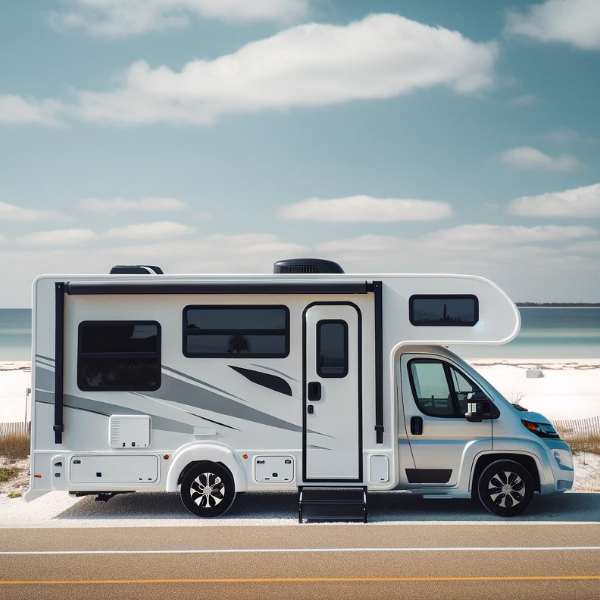
If you’re researching RV camping for the first time, chances are you’ve come across the term full-hookup RV site—and wondered what it actually means. Is it necessary? Is it worth the extra cost? And how does it impact your overall RV experience?
For many RV travelers, especially beginners, understanding hookups is one of the most important steps in planning a smooth, comfortable trip. Full-hookup RV sites are designed to take the guesswork out of camping by providing everything your RV needs in one place. Instead of worrying about conserving water, finding a dump station, or managing limited electricity, you can focus on enjoying your destination.
In this guide, we’ll break down exactly what full-hookup RV sites are, what’s included, and why they matter—using clear, beginner-friendly explanations every step of the way.

What Is a Full-Hookup RV Site?
A full-hookup RV site is a campsite that provides three essential connections directly at your site:
- Fresh water
- Sewer
- Electricity
These hookups allow your RV to operate much like a small apartment on wheels. You can shower, use the restroom, cook meals, and run appliances without constantly monitoring tank levels or power usage.
This is different from other types of RV sites, such as:
- Partial-hookup sites, which usually include electricity and water but no sewer
- Electric-only sites, which provide power but require you to conserve water and dump tanks elsewhere
- Dry camping or boondocking, which offers no hookups at all
For beginners, full-hookup RV sites are often the easiest and most stress-free option. Many modern RV resorts—such as Hilton Head National RV Resort and Majestic Oaks RV Resort—offer full-hookup sites as a standard feature because of the comfort and convenience they provide.

What’s Included in a Full-Hookup RV Site?
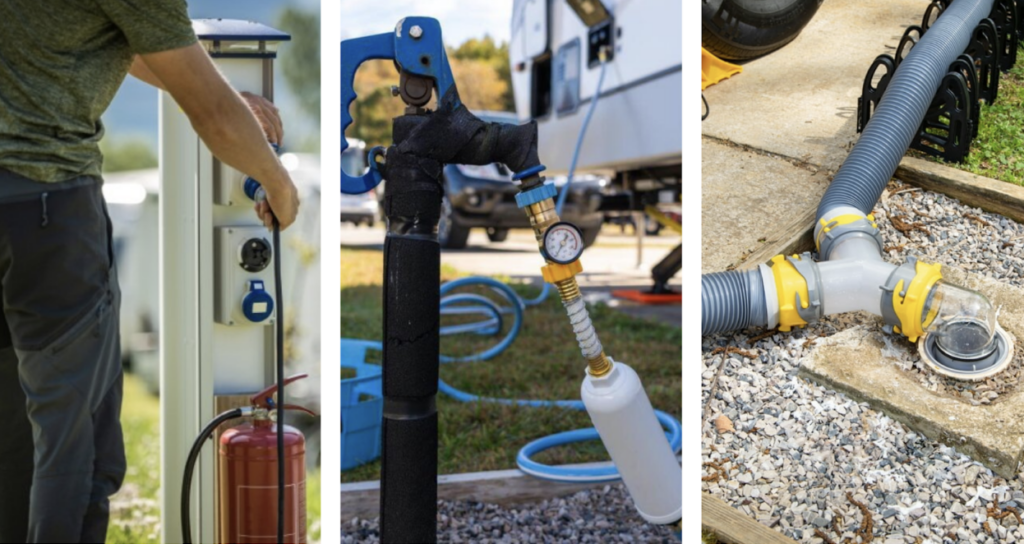
Understanding each hookup individually makes the concept of a full-hookup site much easier to grasp.
Water Hookup: Fresh Water on Demand
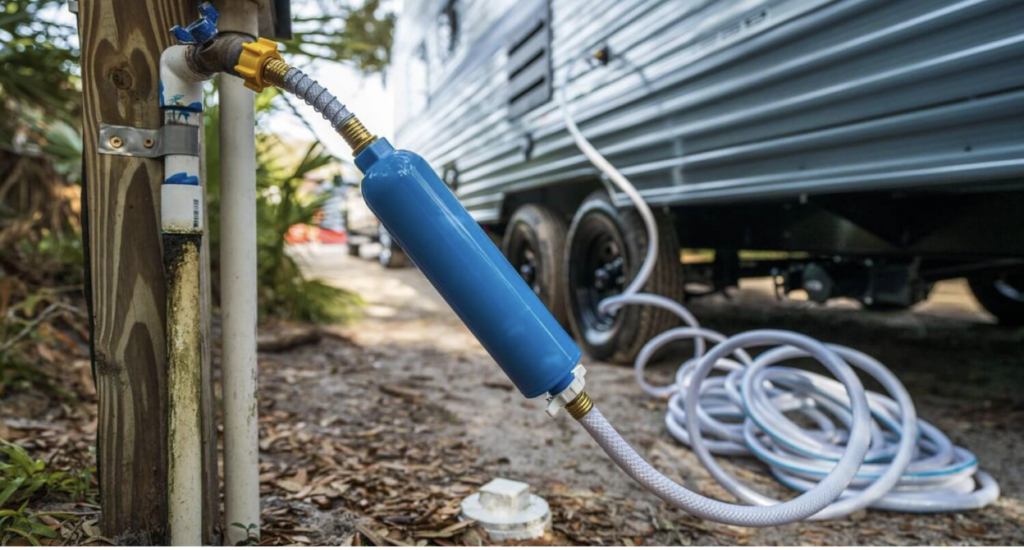
When you connect your RV to a campground water hookup, the water supplied is typically:
- Fresh
- Potable (safe to drink)
- The same type of treated water used in homes and businesses
This allows you to use sinks and showers normally, flush the toilet without worrying about running out of water, and cook and clean dishes comfortably.
Most RVers use a drinking-water-safe hose and often add a pressure regulator to protect their plumbing. With a water hookup, you don’t need to rely solely on your onboard fresh water tank, which is especially helpful for longer stays.
Gray Water: Used Water from Daily Activities
Gray water is created inside your RV, not supplied by the campground..
It comes from:
- Sinks
- Showers
- Bathroom vanities
Even though gray water may look relatively clean, it is not drinkable and contains soap residue, food particles, bacteria, and cleaning products. It is stored in your RV’s gray water tank until it is released into the sewer hookup.
Sewer Hookup: How It Really Works (and Best Practices)
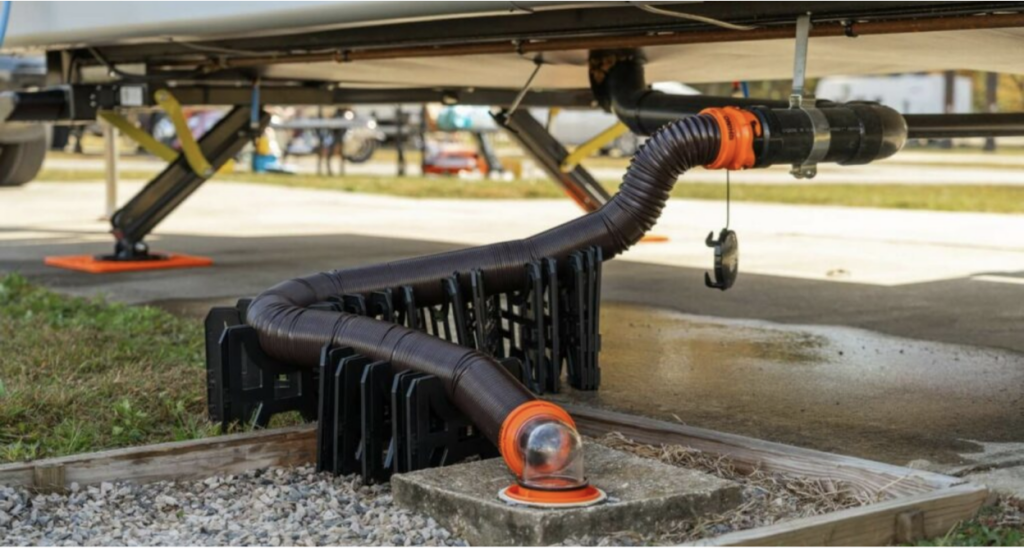
A sewer hookup allows you to connect your RV’s wastewater system directly to the campground’s sewer line—but it doesn’t mean your RV toilet works exactly like a residential toilet.
Inside your RV, waste from the toilet goes into a black water tank, while water from sinks and showers goes into a gray water tank. Even when you have a full-hookup site, most RVers keep the black tank valve closed and let the tank fill before dumping it.
Here’s why that matters:
- Liquid is essential for flushing solid waste out of the black tank
- Leaving the valve open all the time can cause liquids to drain away while solids remain behind
- This can lead to unpleasant odors, clogs, and what RVers commonly call a “poop pyramid”
The Right Way to Use a Sewer Hookup
For beginners, this is the most commonly recommended approach:
- Keep water in the black tank at all times (you do this by holding the pedal down on your toilet to fill the black tank with water)
- Use the toilet normally, letting the tank fill over several days
- Dump the black tank only when it’s at least ⅔ full
- After dumping, close the black tank valve and add water back in
- Use your RV’s black tank flush system (if equipped) to spray water inside the tank after dumping.
The sewer hookup makes dumping easy because you don’t need to move your RV or visit a dump station—but the dumping process is still intentional and controlled.
Gray Tank Use Is More Flexible
Many RVers leave the gray tank valve open, especially during longer stays. This allows shower and sink water to flow out continuously and eliminates the need to empty your gray tank frequently, as they typically fill up faster than the black tank. Others prefer to keep it closed and dump it periodically—both methods are common and acceptable.
Why Sewer Hookups Are Still a Huge Advantage
Even with proper tank management, having a sewer hookup at your site means:
- No towing or driving to a dump station
- Cleaner, easier dumping when you’re ready
- Less stress for beginners learning the process
- More confidence during longer stays
Luxury RV resorts often design their full-hookup sites with easy-access sewer connections, making proper tank management simple and hygienic for guests.
Electrical Hookup: Reliable Power
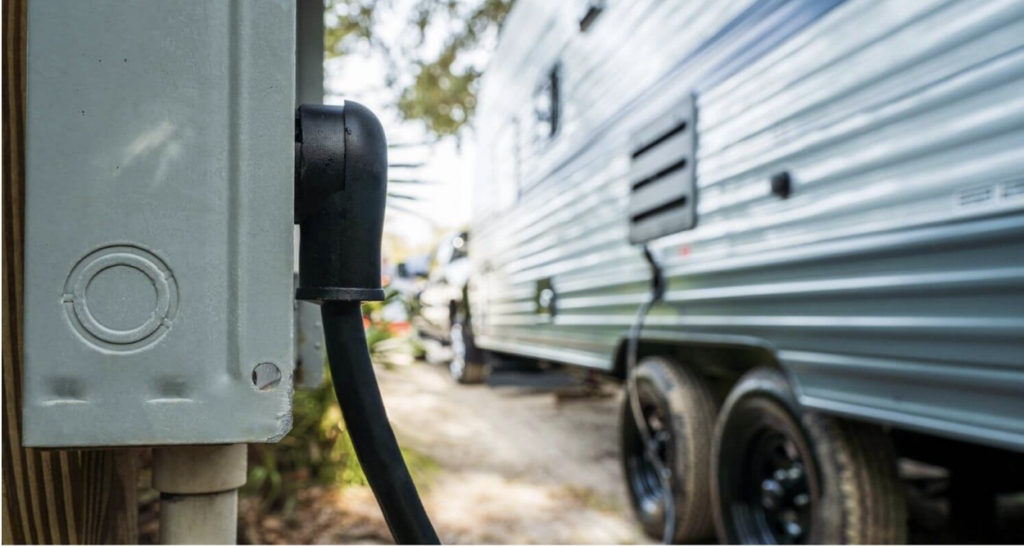
Electric hookups typically come in 30-amp or 50-amp service:
- 30-amp: Common for smaller RVs and travel trailers
- 50-amp: Ideal for larger RVs with multiple air conditioners and appliances
An electrical hookup is what powers nearly everything inside your RV—from lights and outlets to air conditioning and kitchen appliances. At a full-hookup RV site, this power comes from a campground pedestal and is delivered through either 30-amp or 50-amp service.
Understanding the difference between these two options is important, because it directly affects how much electricity you can safely use at one time.
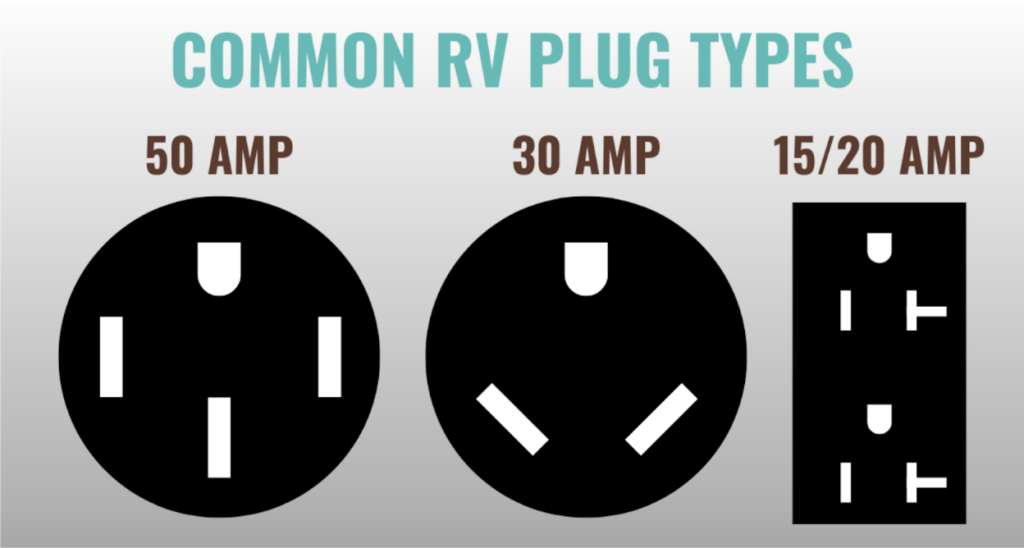
30-Amp RV Service
With 30-amp service, you can usually run:
- One air conditioner
- Refrigerator
- Lights and outlets
- TV and basic electronics
However, power management is important. Running multiple high-demand appliances—such as an air conditioner and microwave at the same time—can overload the system and trip a breaker. Many RVers on 30 amp simply get used to running appliances one at a time.
50-Amp RV Service
50-amp service is ideal for:
- Larger motorhomes and fifth wheels
- RVs with two or more air conditioners
- Residential-style refrigerators
- Washer/dryer combos and multiple appliances
With 50 amp service, you can run several systems at once without worrying about overloading the electrical system. This is why many newer RVs are built specifically for 50 amp and why luxury RV resorts prioritize offering strong, reliable 50-amp connections at their full-hookup sites.
Why Full-Hookup RV Sites Matter—Especially for Beginners
Full hookups remove many of the most stressful parts of RV camping:
- No hauling water
- No driving to dump stations
- Less guesswork about power usage
They allow you to:
- Stay longer
- Relax more
- Learn your RV systems at a comfortable pace
For first-time RVers, families, and anyone prioritizing comfort, full-hookup sites create a smoother, more enjoyable experience.
Full-Hookup RV Sites vs. Other Camping Options
Choosing the right type of site depends on your comfort level and travel goals.
- Full-hookup sites are best for comfort, convenience, and extended stays
- Partial hookups may work for short trips but require more planning
- Dry camping appeals to experienced RVers seeking solitude, but requires careful resource management
For most travelers researching RV camping—especially families, couples, and first-timers—full hookups offer the best balance of ease and enjoyment.
Who Should Choose a Full-Hookup RV Site?
Full-hookup RV sites are a great choice if you are:
- New to RV travel
- Traveling with family or pets
- Planning a multi-night or extended stay
- Working remotely from your RV
- Looking for a relaxed, resort-style experience
Even experienced RVers often prefer full hookups when staying at destination resorts, where comfort and amenities are part of the experience.
Tips for Booking the Right Full-Hookup RV Site
When booking a full-hookup site, keep these beginner-friendly tips in mind:
- Confirm amp service (30 vs. 50 amp)
- Ask about site size to ensure your RV fits comfortably
- Check proximity to amenities like pools, clubhouses, or walking trails
- Book early during peak travel seasons
Not all full-hookup sites are created equal. Well-maintained resorts with thoughtfully designed sites make a noticeable difference in your stay.
Why Full-Hookup RV Sites Are Worth It
Full-hookup RV sites provide fresh water, controlled sewer access, and reliable electricity—all designed to make RV camping easier and more comfortable. Understanding how each system works, especially water and sewer, helps beginners avoid common mistakes and feel confident using their RV.
Whether you’re planning your first trip or upgrading your camping style, full-hookup RV sites offer the best balance of convenience, comfort, and peace of mind. Resorts like Hilton Head National RV Resort and Majestic Oaks RV Resort demonstrate how thoughtfully designed full-hookup sites can elevate the entire RV experience.